The first thing most beginners notice when exploring Sports Betting is a list of numbers beside every team or player. At first glance, they may look confusing, but these numbers are one of the most important parts of every wager. These are called Odds, and understanding what they represent can help you make better decisions before placing a bet. Instead of guessing what the numbers mean, learning how Odds work gives you a clearer picture of potential payouts, probability, and how sportsbooks evaluate each event.
This guide explains Odds in simple English, including how they are calculated, why they change before and during sporting events, and why understanding them is an important part of learning Sports Betting responsibly.
Why Odds Matter in Sports Betting
Before placing any wager, it is important to understand that Odds do more than show your potential payout. In Sports Betting, they also represent how likely a sportsbook believes a particular outcome is based on available information. Learning how to read odds helps beginners understand the value behind each betting option instead of making decisions based only on personal opinions.
Understanding Odds in Sportsbetting can help you:
- Estimate potential payouts.
- Understand the probability of an outcome.
- Compare different betting opportunities.
- Recognize how betting markets change.
- Make more informed betting decisions.
Learning these basics gives beginners a stronger foundation and makes it easier to understand how Sports Betting works before placing their first wager.
These basic skills provide a stronger foundation before exploring more advanced areas of Sports Betting.
Understanding How Odds Work
Every betting market includes Odds that represent the possible return for a successful wager. At the same time, they reflect how likely an event is expected to happen according to the sportsbook.
Generally, lower odds indicate that an outcome is considered more likely, while higher odds suggest a lower probability but offer a larger potential return. This relationship between probability and payout is one of the most important concepts every beginner should understand.
For example:
- Lower Odds usually mean lower returns but higher expected probability.
- Higher Odds usually mean larger returns but lower expected probability.
Although the numbers may look simple, they are based on detailed analysis performed by sportsbooks before the event begins.
Odds Explained Through Common Formats
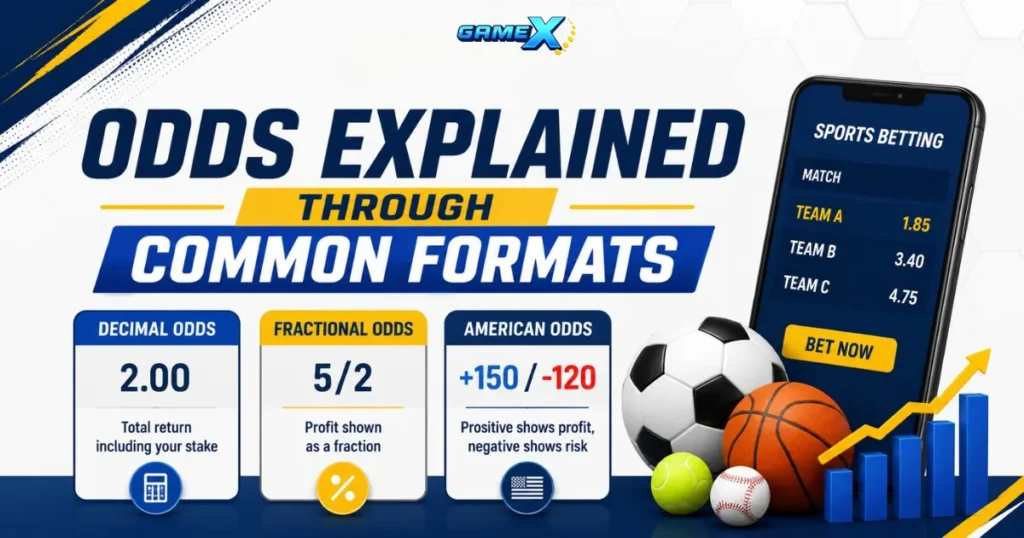
One useful part of learning Odds is understanding that different countries display them in different formats. While the numbers may look different, they all provide the same information.
Decimal Odds
Decimal Odds are among the easiest formats for beginners.
They show the total return for every unit wagered, including the original stake.
Example:
- Stake: ₱100
- Decimal Odds: 2.00
- Total Return: ₱200
Many international sportsbooks use this format because it is simple to calculate.
Fractional Odds
Fractional Odds are commonly used in some regions, particularly for horse racing.
Instead of decimals, they appear as fractions such as:
- 2/1
- 5/2
- 10/3
These fractions represent the profit relative to the original stake.
American Odds
American Odds use positive and negative numbers.
Examples include:
- +150
- -120
Positive values indicate the potential profit from a standard stake, while negative values show how much is required to win a certain amount according to sportsbook rules.
Understanding these three formats makes it easier to read different Sports Betting platforms.
Why Odds Change Before Sporting Events
One question many beginners ask is why Odds change even before a game begins.
The answer is that sportsbooks constantly update their prices whenever new information becomes available. Their goal is to reflect changing probabilities while balancing betting activity on both sides of a market.
Several factors may influence these adjustments:
- Injury reports.
- Player availability.
- Team lineup changes.
- Weather forecasts.
- Coaching decisions.
- Public betting activity.
- Recent team performance.
As new information becomes available, sportsbooks adjust the odds to reflect the latest expectations for the event.
Why Odds Change During Live Sports Betting
Live Sports Betting introduces another reason why Odds move constantly.
Unlike pre-match betting, live betting updates throughout the event based on what is happening in real time. Every goal, basket, point, foul, or momentum shift can affect the probability of different outcomes.
For example, if a football team scores early in the match, the sportsbook may immediately adjust the odds to reflect its improved chances of winning. Because live events change quickly, odds during in-play betting can update within seconds.
How Sportsbooks Calculate Odds
Many beginners assume sportsbooks simply guess the numbers they publish. In reality, creating Odds involves detailed analysis supported by data, statistics, and market activity.
Sportsbooks typically evaluate:
- Historical team performance.
- Player statistics.
- Head-to-head records.
- Current form.
- Home and away performance.
- Injury updates.
- Weather conditions.
- Market demand.
After analyzing these factors, sportsbooks publish opening odds. As more information and betting activity arrive, they continue adjusting those numbers to maintain accurate markets.
Common Mistakes When Reading Odds
Learning Odds also means avoiding common misunderstandings that many beginners experience.
Some frequent mistakes include:
- Assuming lower odds always guarantee a win.
- Believing higher odds are always better.
- Ignoring changes before the event starts.
- Betting without understanding probability.
- Choosing wagers based only on emotions.
- Following popular opinions instead of research.
Recognizing these mistakes helps beginners build better betting habits while improving their understanding of Sports Betting.
Using Odds as a Learning Tool
For beginners, Odds should be viewed as more than potential payouts. They can also serve as a learning tool for understanding how sportsbooks evaluate sporting events.
Comparing opening odds with closing odds allows bettors to observe how markets react to new information. Watching live odds during a match also helps explain how changing game situations affect probability.
Even if you are not placing bets, simply observing how odds move can improve your understanding of betting markets over time.
Building Better Knowledge Before You Bet
Understanding Odds is only one part of learning Sports Betting, but it is one of the most important. Beginners should continue building their knowledge by following sports news, learning how different betting markets work, and reviewing sportsbook rules regularly.
It is also important to remember that no set of odds can predict an outcome with complete certainty. Injuries, weather conditions, unexpected performances, and many other factors can influence the final result. Having realistic expectations is an important part of responsible betting.
Understanding Odds Starts With Learning
Learning how Odds work helps beginners understand the numbers behind every sports bet instead of simply looking at potential payouts. By knowing why odds change, how sportsbooks calculate them, and what different formats mean, new bettors can better understand the overall Sports Betting process.
While no guide can guarantee winning results, understanding Odds provides a stronger foundation for making informed decisions. Continue learning, compare different markets, and approach Sports Betting with realistic expectations and responsible betting habits.