Watching someone place a sports bet for the first time can be surprisingly misleading. It often looks like they simply pick a team, enter an amount, and wait for the match to begin. What many beginners do not see is the thinking that happens before the bet is placed. Experienced bettors spend more time understanding the numbers than clicking the betting button. They know that odds are more than potential payouts they reflect probability, market expectations, and the level of risk involved.
Learning How to Read Betting Odds is not about memorizing formulas. It is about understanding what those numbers are trying to tell you before you commit your money. Once you develop that habit, you begin making decisions based on information rather than excitement.
How to Read Betting Odds Without Chasing the Biggest Payout
One of the most common beginner mistakes is looking straight at the possible winnings. Seeing a large payout can be exciting, but successful betting starts by understanding why those numbers exist in the first place.
Bookmakers use Odds to estimate the likelihood of different outcomes. Generally, lower odds indicate a higher chance of winning, while higher odds suggest the result is considered less likely.
Instead of asking:
“How much money can I win?”
Try asking:
“Why has the bookmaker priced this outcome this way?”
That simple change in perspective helps you think beyond potential rewards and focus on the actual value of the bet.
Every Number Tells a Story Before the Match Begins

Betting odds are constantly influenced by information. Sportsbooks do not assign prices randomly. Their analysts evaluate multiple factors before publishing the market, and those prices continue to change as new information becomes available.
Some of the factors that commonly affect Odds include:
- Recent team or player performance
- Home and away records
- Injuries and suspensions
- Head-to-head history
- Weather conditions
- Public betting activity
- Breaking team news
This is why odds sometimes move hours or even minutes before an event starts. A key player being ruled out or unexpected betting activity can immediately influence the market.
Understanding this helps beginners see odds as a reflection of current information rather than fixed numbers.
How to Read Betting Odds Across Different Formats
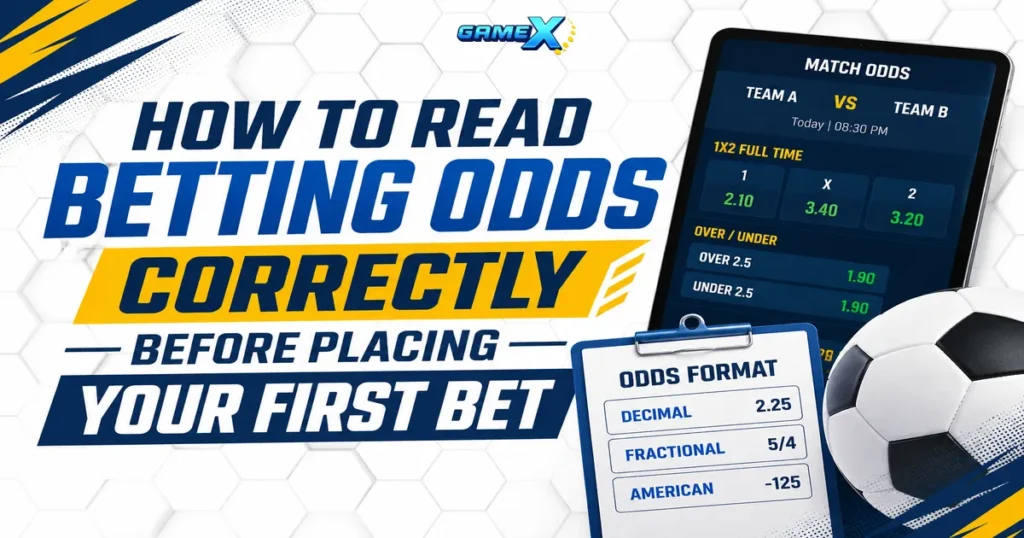
Different sportsbooks may display betting odds in different ways depending on the country or platform. Although the numbers look different, they all communicate the same two things: the potential return and the implied probability of an outcome.
| Odds Format | Example | What It Shows | Commonly Used In |
| Decimal | 2.50 | Total return including your stake | Europe, Asia, Australia |
| Fractional | 5/2 | Profit compared to your original stake | United Kingdom, horse racing |
| American | +180 / -150 | Positive and negative pricing system | United States |
After understanding the differences, switching between formats becomes much easier.
How to Read Betting Odds in Decimal Format
Decimal odds are the easiest format for beginners because they show your total return, including your original stake.
Example:
- Decimal Odds: 2.20
- Stake: ₱500
- Total Return: ₱1,100
- Profit: ₱600
This format is popular because you only need to multiply your stake by the decimal odds to estimate your total return.
How to Read Betting Odds in Fractional Format
Fractional odds compare your potential profit to the amount you wager. They are commonly used in British sportsbooks and horse racing.
Example:
- Fractional Odds: 5/1
- Stake: ₱100
- Profit: ₱500
- Total Return: ₱600
Once you understand that the first number represents the profit relative to your stake, fractional odds become much easier to read.
How to Read Betting Odds in American Format
American odds use positive and negative numbers to show potential profit or required risk.
Example 1: Positive Odds (+180)
- Stake: ₱100
- Profit: ₱180
- Total Return: ₱280
Example 2: Negative Odds (-150)
- Risk ₱150 to earn ₱100 profit.
- Total Return: ₱250
Although the calculations differ from decimal and fractional formats, American odds communicate the same information about potential returns and probability.
How Experienced Bettors Read the Same Odds Differently
Imagine a football match with these prices:
- Home Team — 1.38
- Draw — 4.80
- Away Team — 7.10
A beginner often notices one thing:
“The away team pays much more.”
An experienced bettor notices something else entirely.
They begin asking questions such as:
- Why is the away team considered a heavy underdog?
- Has the home team been performing exceptionally well?
- Are there important injuries affecting one side?
- Has the market moved because of recent news?
Instead of seeing only the payout, they use the odds as the starting point for further analysis.
This mindset separates informed betting from emotional decision-making.
How to Read Betting Odds Before Comparing Teams
Many beginners immediately compare team names before looking at the betting market. A better approach is to follow a consistent process before making any decision.
A practical routine includes:
- Identify the betting market you want to play.
- Read the available odds carefully.
- Review recent team or player performance.
- Check important news, injuries, or suspensions.
- Decide whether the odds fairly reflect the situation.
Following this sequence encourages more disciplined betting rather than relying on instinct alone.
Common Mistakes Beginners Make When Reading Betting Odds
Understanding betting odds becomes much easier once you recognize the mistakes that many first-time bettors make.
Some of the most common errors include:
- Choosing the highest odds simply because they offer bigger payouts.
- Confusing total return with actual profit.
- Ignoring changes in the betting market before the event starts.
- Believing different odds formats represent different probabilities.
- Placing bets without understanding the betting market itself.
Avoiding these habits helps beginners make more informed decisions and reduces unnecessary risks.
How to Read Betting Odds Together With Match Analysis
Odds provide valuable information, but they should never be the only factor behind a betting decision. Experienced bettors combine market prices with independent research before placing a wager.
Helpful information to review includes:
- Current form and recent results
- Head-to-head records
- Home and away performance
- Team motivation
- Player injuries and suspensions
- Tactical changes
- Weather conditions for outdoor sports
Looking at both the numbers and the surrounding context creates a more balanced understanding of the event. While no betting strategy guarantees success, combining research with a proper understanding of Odds leads to more thoughtful decisions than relying on potential payouts alone.
In Summary
Learning How to Read Betting Odds is about much more than understanding calculations. It is about recognizing how bookmakers evaluate sporting events and how those evaluations are reflected in the numbers displayed before every match. Whether you encounter decimal, fractional, or American formats, each one communicates the same core message about probability and potential returns.
By reading beyond the payout, avoiding common beginner mistakes, and combining odds with careful match analysis, you can approach your first bet with greater confidence and a stronger understanding of how sports betting markets really work.